Brooklyn is one of the busiest and most densely populated areas in the country. From packed subway platforms and bustling sidewalks to parks, restaurants, and events, people are constantly surrounded by others. While this creates a vibrant community, it also means that medical emergencies can happen in crowded environments where immediate action is critical.
In those moments, the people nearby become the first responders. Knowing CPR is important, but being able to perform it confidently in a chaotic setting is what truly saves lives. That is why hands-on, in-person CPR Certification training is essential for anyone living or working in Brooklyn.
Why Crowded Spaces Increase Emergency Risk
High-density environments naturally increase the likelihood of witnessing a medical emergency.
In Brooklyn, common high-risk locations include:
- Subway stations and public transit
- Busy intersections and sidewalks
- Restaurants, gyms, and entertainment venues
In these settings:
- Large crowds can delay access to the person in need
- Emergency responders may take time to navigate traffic and congestion
- Immediate bystander action becomes the most important factor
Urban studies show that dense areas like NYC can experience delays in emergency response due to traffic and infrastructure challenges, reinforcing the importance of nearby help.
What Happens During Sudden Collapse
Sudden collapse is often caused by cardiac arrest, where the heart stops pumping blood effectively. When this happens:
- The person loses consciousness within seconds
- Breathing stops or becomes irregular
- Oxygen flow to the brain is cut off
Without immediate CPR, survival chances drop rapidly. In fact, every minute without intervention can reduce survival by about 10%, and many victims do not receive help quickly enough.
In crowded spaces, where EMS may take several minutes to reach the scene, bystanders play a critical role.
Why Bystander CPR Is Critical in Brooklyn
Bystander CPR is the single most important factor in improving survival rates during cardiac arrest.
Research shows:
- CPR can double or triple survival chances when performed immediately
- Fewer than half of victims receive CPR in public settings
- AEDs are used in only about 7% of public cardiac arrests
These statistics highlight a major gap. Even in crowded places where help is nearby, many people are not prepared to act.
The Challenge of Responding in Crowds
Helping someone in a crowded Brooklyn environment is very different from responding in a quiet setting.
Challenges include:
- Noise and confusion making communication difficult
- Limited space to perform CPR
- Bystanders unsure how to assist
This is why preparation matters. Training helps you stay focused and take control of the situation.
Why Hands-On Training Is Essential
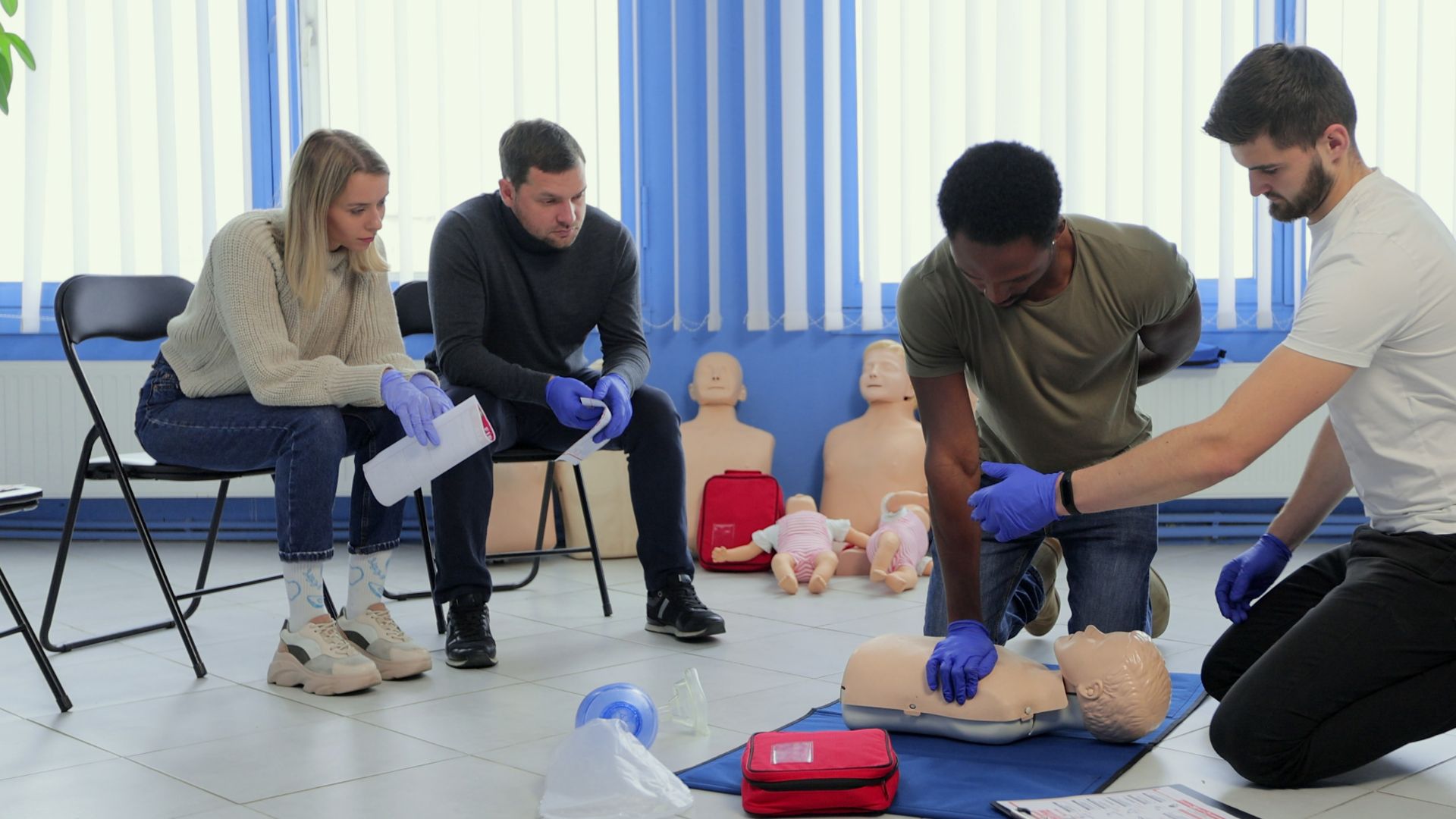
CPR is not just something you understand. It is something you physically perform. Without practice, many people struggle to apply what they know in real situations.
Hands-on training allows you to:
- Practice chest compressions with proper depth and rhythm
- Learn how to position yourself in tight or crowded spaces
- Receive immediate feedback to improve technique
This type of training builds real-world readiness, not just theoretical knowledge.
Choosing an in-person CPR Certification course ensures you are prepared for the realities of Brooklyn emergencies.
Muscle Memory Is Key in High-Stress Situations
In a real emergency, especially in a crowded space, you will not have time to think through every step.
Hands-on training builds muscle memory so you can:
- Start CPR immediately without hesitation
- Maintain correct technique under pressure
- Stay focused despite distractions
This automatic response is what turns a bystander into a lifesaver.
The Role of AEDs in Public Spaces
Automated External Defibrillators (AEDs) are often placed in crowded areas such as:
- Transit hubs
- Schools and gyms
- Shopping centers
Health organizations recommend AEDs be available in crowded places because they significantly improve survival outcomes.
However, they are often underused because people:
- Do not know where they are located
- Are unsure how to use them
- Hesitate due to lack of training
Hands-on CPR training teaches you how to use an AED confidently, making you more likely to act.
Why People Hesitate to Help
Even in a crowded environment, hesitation is one of the biggest barriers to action.
Common reasons include:
- Fear of doing something wrong
- Lack of confidence
- Uncertainty about CPR or AED use
Studies show that lack of confidence is a major factor preventing bystanders from intervening.
Training eliminates this hesitation by giving you real experience and confidence.
Brooklyn-Specific Scenarios Where CPR Is Needed
In Brooklyn, emergencies can happen in everyday situations such as:
- A commuter collapsing on the subway
- A parent experiencing cardiac arrest at a park
- A gym member collapsing during a workout
In each of these scenarios, the outcome depends on how quickly someone nearby takes action.
Why Timing Is Everything
During cardiac arrest, the first few minutes are critical.
Without intervention:
- Brain damage can begin within 4 to 6 minutes
- Survival chances decrease rapidly
- Delays lead to worse outcomes
Emergency response times in busy urban areas can vary, making immediate bystander action essential.
Why Online Training Is Not Enough
Online CPR courses can provide useful information, but they cannot prepare you for real-world situations in crowded environments.
Limitations include:
- No physical practice
- No feedback on technique
- Lower confidence in emergencies
CPR is a hands-on skill, and it must be practiced to be effective.
Building Confidence Through Practice
Confidence is what allows people to take action in emergencies. Hands-on training builds that confidence through repetition and real-life scenarios.
Training helps you:
- Stay calm in chaotic environments
- Take control of the situation
- Act quickly without second-guessing
This is especially important in Brooklyn, where distractions and crowds can make emergencies more challenging.
Why Community Training Matters
The more people trained in CPR, the safer a community becomes.
When more Brooklyn residents are trained:
- Response times improve
- More victims receive immediate help
- Survival rates increase
Community-wide training strengthens the entire safety network.
Who Should Learn CPR in Brooklyn
CPR training is valuable for everyone, but especially for those who:
- Use public transportation regularly
- Work in customer-facing roles
- Spend time in crowded environments
In a city like Brooklyn, anyone could be the first person on the scene.
The Long-Term Value of CPR Training
CPR training is not just useful for one situation. It is a lifelong skill that can be used anywhere.
It provides:
- The ability to save lives
- Greater confidence in emergencies
- Increased awareness of safety
This makes it one of the most valuable skills you can learn.
Why In-Person Training Is Worth It
Most in-person CPR classes take only a few hours, but the impact can last a lifetime.
In that time, you gain:
- Real-world experience
- Confidence under pressure
- The ability to act when it matters most
It is a small investment with life-saving potential.
Final Thoughts on CPR in Brooklyn’s Crowded Spaces
Emergencies in Brooklyn’s crowded spaces are unpredictable, but your response does not have to be. In a city where people are constantly surrounded by others, being prepared is essential.
Hands-on CPR training provides the skills, confidence, and readiness needed to act immediately in high-pressure situations. It turns uncertainty into action and hesitation into confidence.
By enrolling in an in-person CPR Certification course, you ensure that you are ready to step in and help when it matters most. In Brooklyn, that preparation could mean saving a life.
Frequently Asked Questions About CPR in Crowded Spaces
What should I do if someone collapses in a crowded area?
Call 911, start CPR immediately, and ask someone nearby to locate an AED.
Why is CPR important in crowded places?
Emergency response may be delayed, so immediate bystander action is critical.
Are AEDs available in public places?
Yes, they are often located in high-traffic areas but may not always be easy to find.
How effective is bystander CPR?
It can double or triple survival chances when performed quickly.
Why do people hesitate to perform CPR?
Lack of confidence and training are the most common reasons.
How can I be better prepared?
Taking an in-person CPR certification course provides hands-on training and builds confidence.